In mold making process, We need used EDM method to got required mold cavity shape. Which is better EDM material, copper electrode or graphite electrode? This article will explain their features.
Precision EDM(Electrical Discharge Machining) is an indispensable process in die or mold manufacturing process. Electrodes must be used for discharge. There are two kinds of common materials for electrodes, one is copper, the other is graphite.
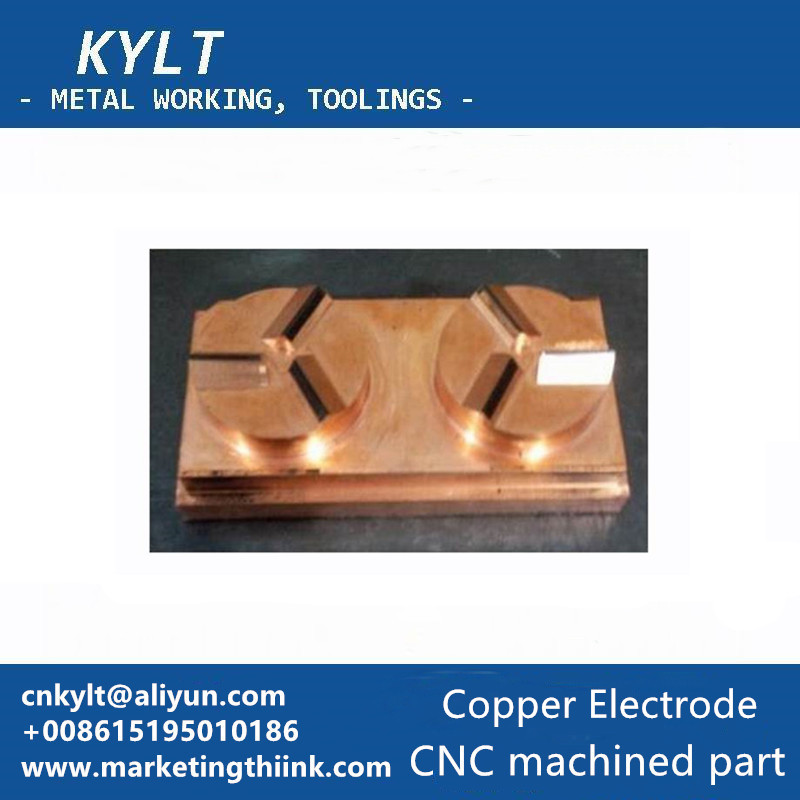
The difference between copper and graphite as electrodes:
Copper is widely used as electrode material in EDM in die and mould factories. Many people think that graphite material will be considered as an alternative only when large electrodes are manufactured and die machining requirements are not high or rough machining process.
Now, in Europe, where manufacturing technology is leading, more than 90% of the electrode materials used by mould enterprises are graphite. However, in China, most die and mould enterprises still choose copper as the main electrode material.
According to the characteristics of graphite materials, the advantages and disadvantages of EDM are analyzed below.
EDM CHARACTERISTICS OF GRAPHITE MATERIALS
1) EDM SPEED
Graphite is a non-metallic material with a very high melting point and can withstand greater current setting conditions. The larger the discharge area and the size of the electrode, the more remarkable the advantages of high efficiency rough processing of graphite materials are.
The thermal conductivity of graphite is 1/3 of that of copper, and the heat generated during discharge can be used to remove metal materials more effectively. Therefore, in the middle and finish processing, its processing efficiency is also higher than that of copper electrode.
Generally speaking, the discharge processing speed of graphite electrodes is 1.5-2 times faster than that of copper electrodes under the right conditions.
2) ELECTRODE LOSS
Graphite electrodes can withstand high current conditions. In addition, under suitable roughing setting conditions, the carbon particles in the corrosion products and decomposition products produced by the working fluid at high temperature are produced by the steel workpiece containing carbon element during processing. Under the action of polarity effect, some of the etchants and carbon particles will adhere to the surface of the electrode to form a protective layer, which ensures that the loss of graphite electrode in rough processing is very small, even “zero loss”.
In EDM, the main loss of electrodes comes from rough machining, and the setting conditions of finish machining are higher, though the loss rate is higher.
Generally speaking, the loss of graphite electrode is less than that of copper electrode in rough machining at high current, and it may be slightly greater in finishing.
3) SURFACE QUALITY
The particle diameter of graphite directly affects the surface roughness of EDM. The smaller the particle diameter, the lower the surface roughness. Several years ago, when graphite materials with particle diameter of 5 microns were used, the surface machined by EDM could only reach VDI18 (Ra0.8 micron). Nowadays, the diameter of graphite particles can reach within 3 microns, and the surface of EDM can reach VDI12 (Ra0.4 micron) or more fine level.
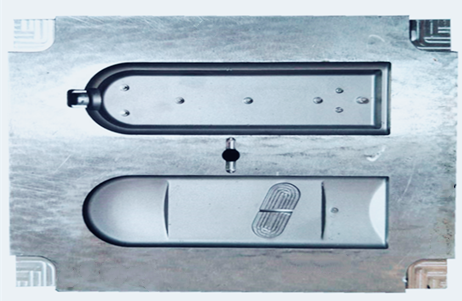
Copper has low resistivity and compact structure. It is easy to obtain stable processing state by EDM, and it can also be processed stably under more difficult conditions. The surface roughness can be less than Ra0.1 micron, and mirror EDM can be carried out. Therefore, if EDM pursues extremely fine surface, it is more appropriate to use copper as electrode.
However, under the condition of high current setting, the surface of copper electrode tends to become rough and even crack, while graphite material has no such problem. For the cavity processing with the surface roughness requirement of VDI26 (Ra2.0 um), one graphite electrode can be used to complete the process from roughness to fineness. Achieve uniform texture effect.
In addition, the structure of graphite and copper is different. The corrosion point of graphite electrode surface discharge is more regular than that of copper electrode. Therefore, when processing the same surface roughness of VDI20 and above, the surface granularity of the workpiece machined with graphite electrode is more distinct. The effect of the grain surface is better than that of the discharge surface of the copper electrode.
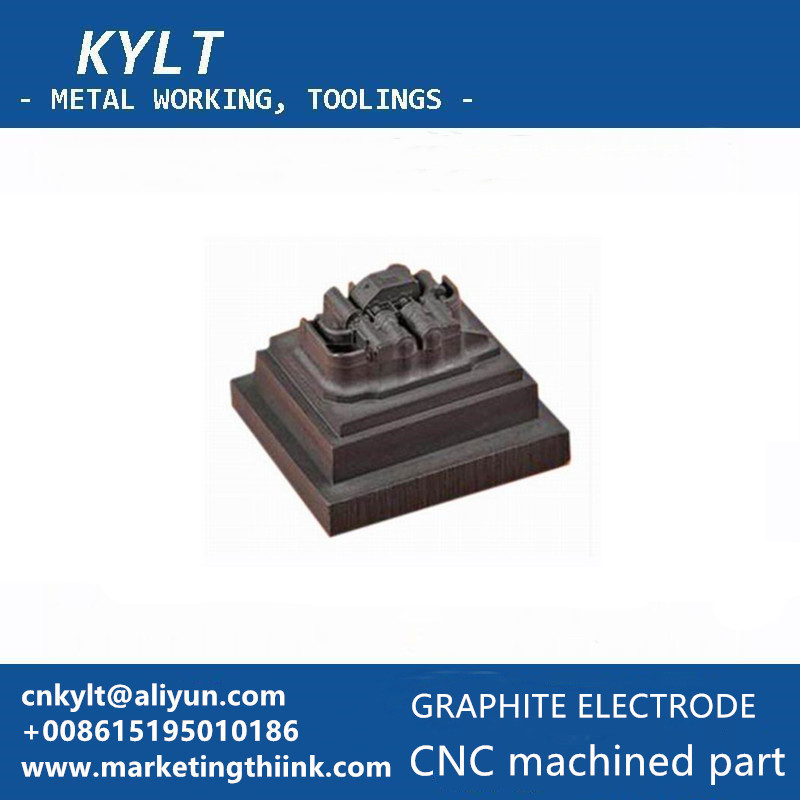
4) MACHINING ACCURACY
The thermal expansion coefficient of graphite material is small, and that of copper material is four times that of graphite material. Therefore, the graphite electrode is less deformed than the copper electrode in EDM, and more stable and reliable processing accuracy can be obtained. Especially in the processing of deep and narrow rib parts, local high temperature easily causes bending deformation of copper electrodes. For copper electrodes with large aspect ratio, a certain thermal expansion value should be compensated to correct the size of the electrode while graphite electrodes need not.
5) ELECTRODE WEIGHT
Graphite material is less dense than copper, and the weight of graphite electrode with the same volume is only 1/5 of that of copper electrode. It can be seen that graphite material is very suitable for larger electrodes. The load on the spindle of EDM machine tool is greatly reduced. The large weight of electrodes will not lead to the inconvenience of clamping and the offset displacement in machining. It can be seen that the use of graphite electrodes in large-scale mold machining is of great significance.
6) DIFFICULTY IN MAKING ELECTRODES
Graphite material has good machinability and cutting resistance is only 1/4 of copper. Under the correct processing conditions, the efficiency of milling graphite electrode is 2-6 times higher than that of copper electrode.
Graphite electrodes are easy to clear the angle, so the workpiece usually completed by multiple electrodes can be designed as a whole electrode to process. The unique particle structure of graphite material makes the electrode not burr after milling. For complex shape, it is not easy to remove burrs, which directly meets the requirements of use, eliminates the manual polishing process of electrodes, and avoids the shape change and size error caused by polishing.
It should be noted that because graphite is a dust accumulation, milling graphite will produce a large amount of dust, so milling machine tools must have a sealing and vacuum device. If WEDM is used to process graphite electrode, its processing performance is not as good as that of copper, and the cutting speed is about 40% slower than that of copper.
7) INSTALLATION AND USE OF ELECTRODES
Graphite materials have good bondability. The method of bonding graphite with fixture by conductive adhesive can be used to milling electrodes and discharge machining. The process of processing screw holes on electrode materials is omitted and the working time is saved.
Graphite materials are relatively brittle, especially small, narrow and long electrodes, which are easy to break when subjected to external forces in use. If the copper electrode is used, it will bend and not break, which will easily lead to the scrap of the workpiece.
8) PRICE
Copper material is a non-renewable resource, and its price is high, while graphite price is stable.
Graphite materials are classified according to their particle diameters.
Fine graphite is defined as the particle diameter (< _4 um).
Particles are defined as medium graphite in the range of 5~_10 um.
Particles above 10 um are defined as rough graphite.
The smaller the particle diameter, the more expensive the material is. The appropriate graphite material can be selected according to the requirements and cost of EDM.
In summary, among the eight EDM characteristics of graphite electrode, its advantages are obvious: the efficiency of milling electrode is significantly better than that of copper electrode; the efficiency of EDM is better than that of copper electrode; the weight of large electrode is light, and it is very suitable; the size stability is good, the thin electrode is not easy to deform; the milling electrode has no burr, and the automatic head. Choose.
DEFICIENCIES OF GRAPHITE MATERIALS:
Milling electrodes requires a special graphite processing machine.
It is not suitable for fine surface discharge machining below VDI12 (Ra0.4 um).
The advantages of graphite electrode materials will be gradually recognized and accepted by domestic die manufacturing industry. Correct selection of graphite electrode materials and improvement of related technological links will bring high efficiency and low cost benefits to die manufacturing enterprises.
KYLT Precision CNC machining services (milling & turning service), Fast prototyping, Fixture/Jig/Tooling making, Aluminum die casting & plastic injection parts. Email:cnkylt@aliyun.com +008615195010186
KYLT CNC Machining Services:
KYLT CNC Precision Machined Parts:
More information about Machining Technology:
评论
发表评论