Molds making or Die manufacturing need use CNC milling machine or CNC router to Cut more metal material to meet drawing design. So, CNC machine operator or mold maker need familiar with NC programming method and machining requirement for mold making.
1.Large diameter R6 cutters (such as 63R6) must be selected as far as possible in rough machining.
2. To determine the processing mode and parameters according to the material and shape of the workpiece, special attention should be paid to the control of the tool path at the corner and direction. The arc transition and feed speed must be increased at the corner.
3.In order to keep as smooth as possible in cutting deep frame workpiece, the program should be divided into cutting depth of 0-160 mm, cutting depth of 1-2 mm, cutting depth of 160-350 mm, 0.35-0.5 mm, and roughing allowance of 0.5-1 mm.
4.Choose the appropriate tool according to the shape of the workpiece, the inner corner and the size of the groove in semi-finishing. If the tool drop is too large, an additional middle-sized tool should be added for local semi-finishing. Semi-finishing should ensure that there is a uniform margin of finishing and reduce the number of tool lifting.
5.In general, the finishing allowance is 0.1-15 mm.
6.The role of the root part in finishing can be divided into three parts: parting surface, interpolation surface, matching surface, material level surface and avoidance surface.
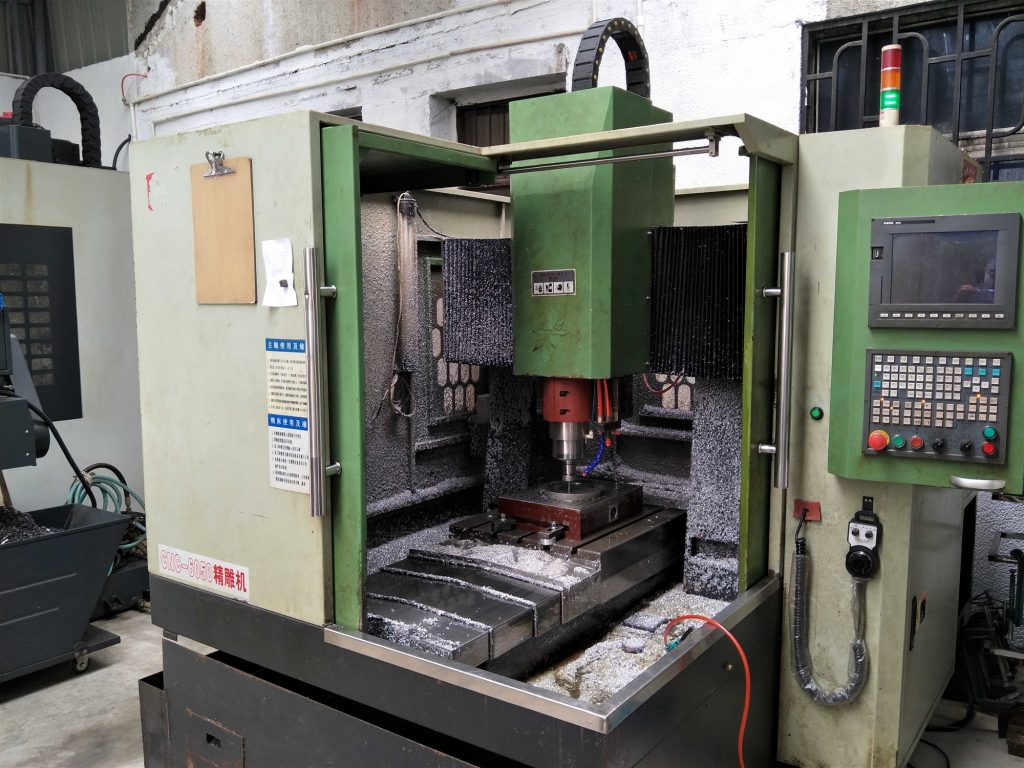
7.Minimize the number of knife lifts during processing. The processing sequence is as follows:
- Parting Surface Processing: New tools must be used.
- The principle of tool selection is to give priority to the use of monolithic alloy knives.
- Secondly, alloy cutters are used. For large area parting surface, the effective part should be super-finishing first.
- The other parts can be properly increased processing progress and feed speed; for the smaller area of the parting surface, one-time processing in place. Machining allowance is 0, roughness is (horizontal Ra0.8, surface Ra1.6).
- Interpolation surface processing: assembly allowance should be reserved according to process requirements (generally 0.1-0.2 mm).
- For larger area of interpolation surface, the effective part should be processed first.
- The other parts can increase the processing progress and feed speed appropriately, and the interpolation surface with a smaller area can be processed in place at one time. Roughness is (horizontal Ra0.8, surface Ra1.6).
8.Coordination surface: It should be processed to the drawing size according to the technological requirements.
9.In general, it is zero-to-zero processing, the allowance is 0, and the roughness is (horizontal Ra0.8, surface Ra1.6).
10.Material Level Surface: In general, zero-to-zero processing allowance is 0. Roughness is (horizontal Ra0.8, surface Ra1.6).
11.Vacancy avoidance surface: When programming, step, feed and speed should be increased, and processing efficiency should be improved. Roughness is (horizontal Ra1.6, surface Ra3.2).
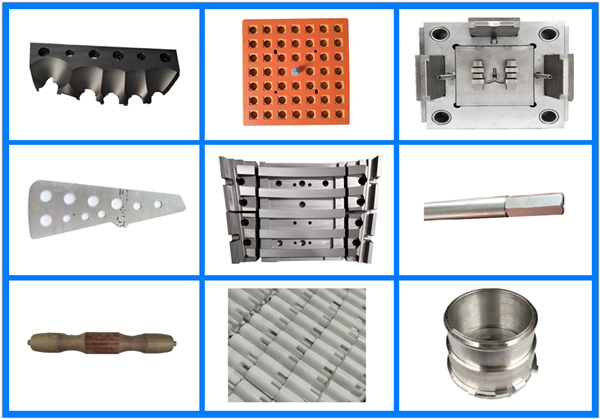
KYLT Precision CNC machining services (milling & turning service), Fast prototyping, Fixture/Jig/Tooling making, Aluminum die casting & plastic injection parts. Email:cnkylt@aliyun.com +008615195010186
KYLT CNC Machining Services:
KYLT CNC Precision Machined Parts:
More information about Machining Technology:
评论
发表评论