跳至主要内容

QUENCHING AND TEMPERING OF STEEL MACHINING PARTS

Steel machining parts, Injection mold or Dies making, Quenching and tempering be required to treat on steel block to make them more hard and with long using life.
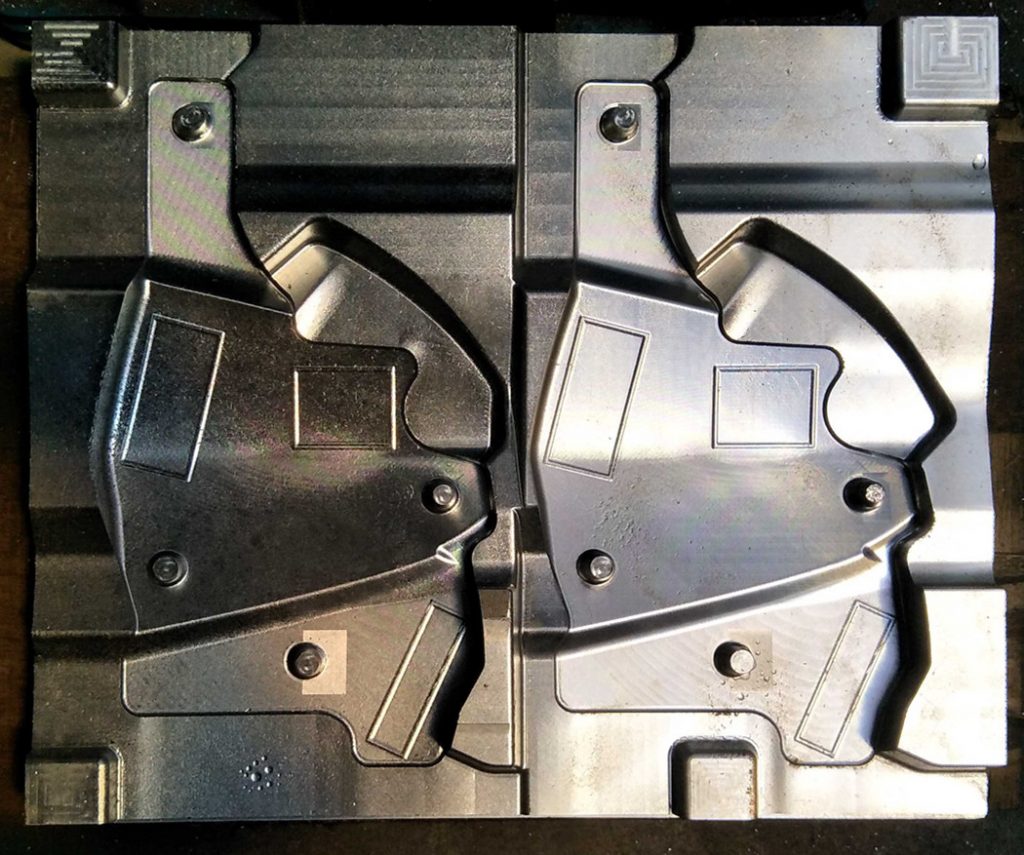
mold making
mold making
Quenching and tempering: The heat treatment method of high temperature tempering after quenching is called quenching and tempering. High temperature tempering refers to tempering between 500 and 650 C. Tempering and tempering can make the properties and materials of steel adjusted to a great extent. Its strength, plasticity and toughness are good, and it has good comprehensive mechanical properties.
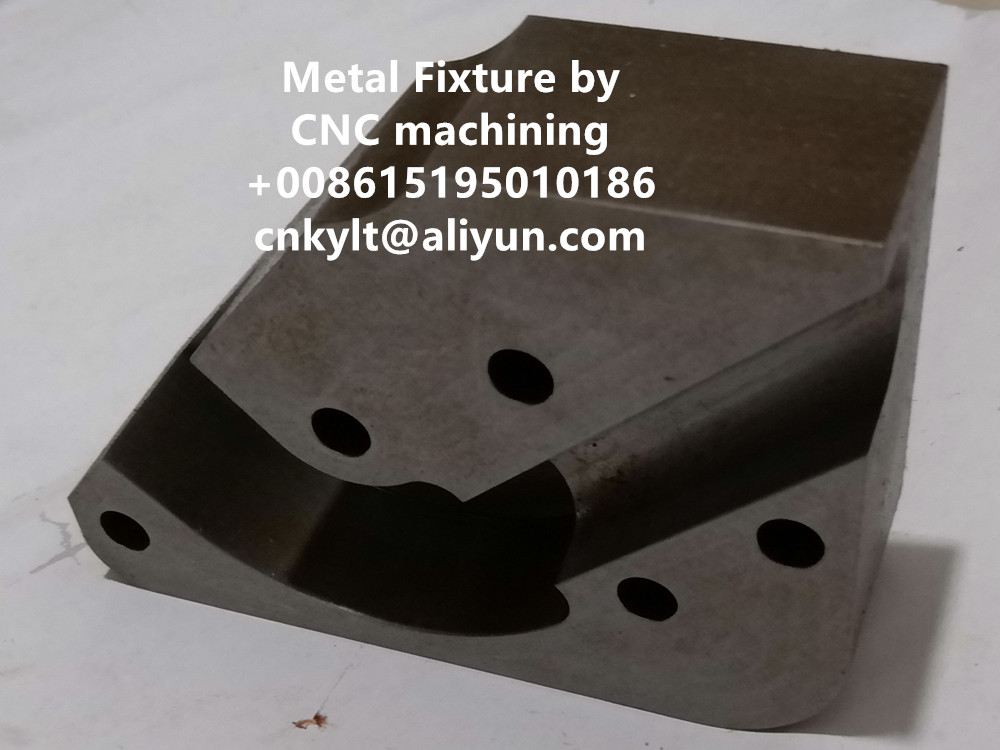
metal fixture
metal fixture
Tempered sorbite was obtained after quenching and tempering. Tempered sorbite is formed when martensite is tempered. It can be distinguished more than 500 to 600 times under optical metallographic microscope. It is a composite structure with carbide (including cementite) spheres distributed in ferrite matrix. It is also a tempering structure of martensite, a mixture of ferrite and granular carbide. At this time, the ferrite has almost no carbon supersaturation, and the carbides are also stable carbides. It is a balanced structure at room temperature.
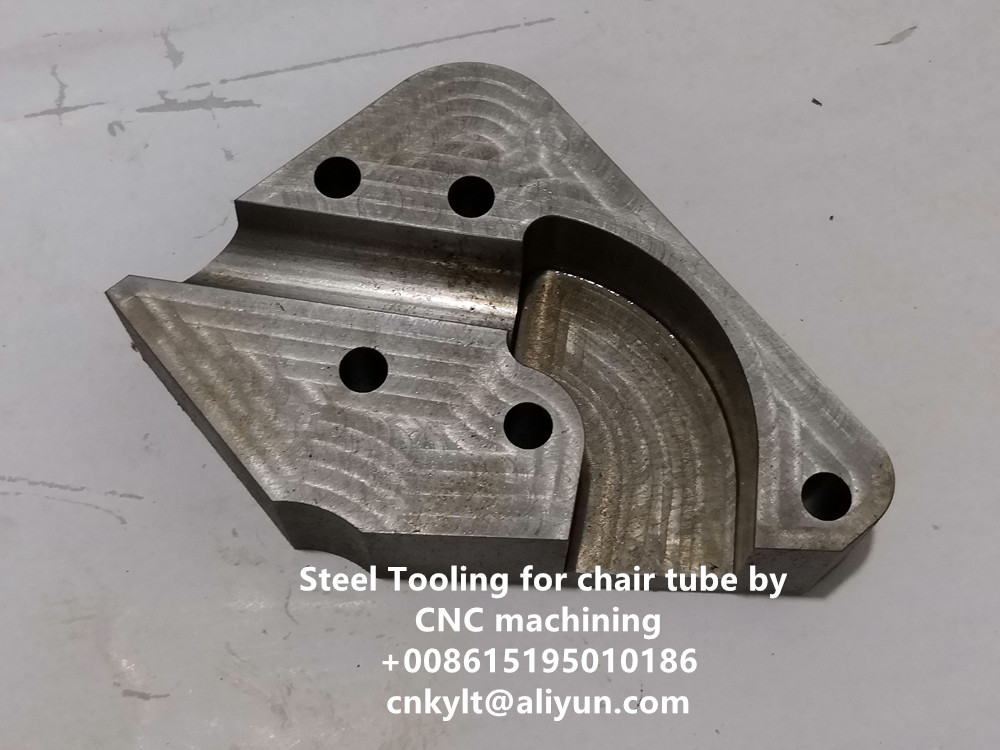
steel tooling
steel tooling
There are two kinds of quenched and tempered steels: carbon quenched and tempered steel and alloy quenched and tempered steel. Whether carbon steel or alloy steel, its carbon content is strictly controlled. If the carbon content is too high, the strength of the workpiece after quenching and tempering is high, but the toughness is not enough, for example, the carbon content is too low, the toughness is improved and the strength is insufficient. In order to obtain good comprehensive properties of quenched and tempered parts, the carbon content is generally controlled at 0.30-0.50%.
During quenching and tempering, the whole section of the workpiece is required to be quenched thoroughly, so that the microstructure of the workpiece is mainly fine needle like quenched martensite. Microstructure of homogeneous tempered sorbite was obtained by high temperature tempering. It is impossible for small factories to do metallographic analysis in each furnace. Generally, hardness testing is only done. That is to say, the hardness after quenching must reach the hardness of the material after quenching, and the hardness after tempering should be checked according to the graph requirements.
KYLT Precision CNC machining services (milling turning service), Fast prototypingFixture/Jig/Tooling makingAluminum die casting & plastic injection parts. Email:cnkylt@aliyun.com +008615195010186
KYLT CNC Machining Services:
KYLT CNC Precision Machined Parts:
More information about Machining Technology:

评论

此博客中的热门博文

CNC MACHINE BE CLASSIFIED BY SERVO CONTROL MODE

Servo control mode to classify CNC machine tool. (1) open loop control CNC machine tool The feed servo drive of this kind of machine tool is open-loop, that is, there is no detection feedback device. Generally, its driving motor is a stepping motor. The main feature of stepping motor is that every time the control circuit changes the command pulse signal, the motor will rotate a step angle, and the motor itself has self-locking ability. The drive circuit is controlled by the pulse distributor, which controls the coordinate displacement by changing the number of pulses, the displacement speed by changing the frequency of pulses, and the direction of displacement by changing the distribution sequence of pulses. Therefore, this control mode is characterized by convenient control, simple structure and low price. The command signal flow from the CNC system is unidirectional, so there is no stability problem of the control system, but because the error of the mechanical transmission...

SELECTION PRINCIPLE OF CUTTING PARAMETERS FOR SCREW THREAD TURNING

Because the pitch (or lead) of the thread is specified by the drawing, the key to choose the cutting parameters when  turning  the screw thread is to determine the spindle speed n and the cutting depth AP. 1) SELECTION OF SPINDLE SPEED TO DO SCREW THREAD TURNING According to the mechanism that the spindle turns 1 and the cutter feeds 1 lead when turning the thread, the feed speed of the CNC lathe is determined by the selected spindle speed. The thread lead (which is the pitch when the thread is single head thread) instructed in the thread processing program section is equivalent to the feed speed VF VF = n f (1) expressed by the feed rate f (mm / R) From Formula 1, it can be seen that the feed speed VF is proportional to the feed amount F. if the spindle speed of the machine tool is selected too high, the converted feed speed will greatly exceed the rated feed speed of the machine tool. Therefore, when selecting the rotation speed of the main shaft for turning the threa...

SCREW THREAD MACHINING METHOD

In  Metal parts machining  works, screw thread (tapping) be required. The screw thread is mainly divided into: connecting thread and driving thread For  connecting thread , the main  machining  methods are: tapping, threading, turning, rolling, etc. For  transmission thread , the main  machining methods  are: rough and fine turning – grinding;whirlwind  milling  – rough and fine  turning , etc. CNC turned screw thread part The following describes the various screw machining methods: THREAD CUTTING Generally, it refers to the method of machining thread on workpiece with forming tool or grinding tool, mainly including  turning , milling, tapping, threading, grinding and whirlwind cutting, etc. THREAD MILLING On the thread milling machine, the disc milling cutter or comb milling cutter is used for milling. Disc  milling  cutter is mainly used for milling trapezoid external thread of screw rod, worm and o...